

Learn what you will actually shell out, how long the restoration takes, and how you can avoid costly surprises after water damage.
Water damage in Kansas and Missouri often strikes without warning — after heavy rain, basement flooding, burst pipes, or aging plumbing failures. When it happens, homeowners immediately want to know three things: cost, restoration time, and insurance coverage.
This guide explains water restoration costs in Missouri and Kansas. You will find current water restoration cost ranges for Kansas and Missouri, typical cleanup and repair timelines, the key factors that influence pricing, and the exact steps to take after water damage. Acting quickly reduces repair costs, limits structural damage, and lowers the risk of mold.
Average Water Restoration Cost in Kansas & Missouri

When water damages your home in Kansas or Missouri, the cost depends on the extent of the damage. you in around hundreds to low thousands to repair. However, significant structural damage, including compromised foundation, will cost you several thousand dollars or even more. The following estimates reflect standard restoration costs in Kansas and Missouri, influenced by regional labor pricing and market demand.
- Basement flooding: $1,500 to $8,000
- Minor leakages: $450 to $1,500
- Considerable structural damage: $5,000 to $20,000 or more
Factors That Affect Water Restoration Cost
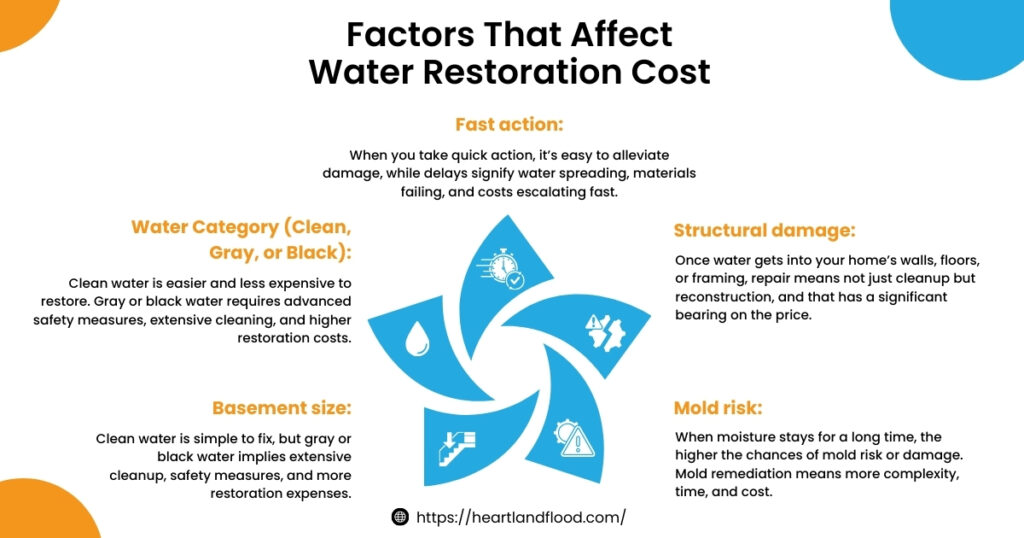
- Water Category (Clean, Gray, or Black): Clean water is easier and less expensive to restore. Gray or black water requires advanced safety measures, extensive cleaning, and higher restoration costs.
- Basement size: Clean water is simple to fix, but gray or black water implies extensive cleanup, safety measures, and more restoration expenses.
- Structural damage: Once water gets into your home’s walls, floors, or framing, repair means not just cleanup but reconstruction, and that has a significant bearing on the price.
- Mold risk: When moisture stays for a long time, the higher the chances of mold risk or damage. Mold remediation means more complexity, time, and cost.
- Fast action: When you take quick action, it’s easy to alleviate damage, while delays signify water spreading, materials failing, and costs escalating fast.
Step-by-Step Process of Basement Water Remediation Process
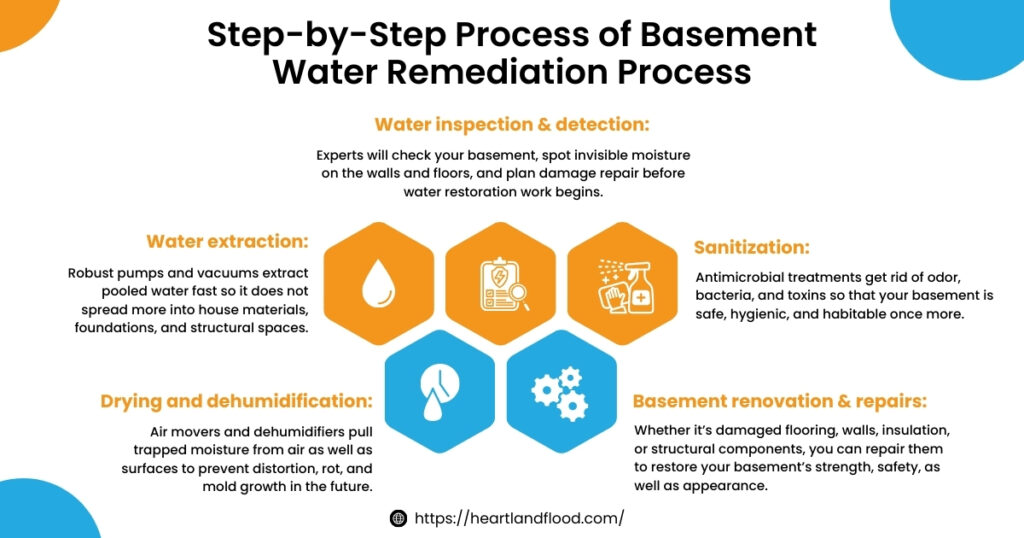
- Water inspection and detection: Experts will check your basement, spot invisible moisture on the walls and floors, and plan damage repair before water restoration work begins.
- Water extraction: Robust pumps and vacuums extract pooled water fast so it does not spread more into house materials, foundations, and structural spaces.
- Drying and dehumidification: Air movers and dehumidifiers pull trapped moisture from air as well as surfaces to prevent distortion, rot, and mold growth in the future.
- Sanitization: Antimicrobial treatments get rid of odor, bacteria, and toxins so that your basement is safe, hygienic, and habitable once more.
- Basement renovation and repairs: Whether it’s damaged flooring, walls, insulation, or structural components, you can repair them to restore your basement’s strength, safety, as well as appearance.
Water Damage and Restoration Timeline
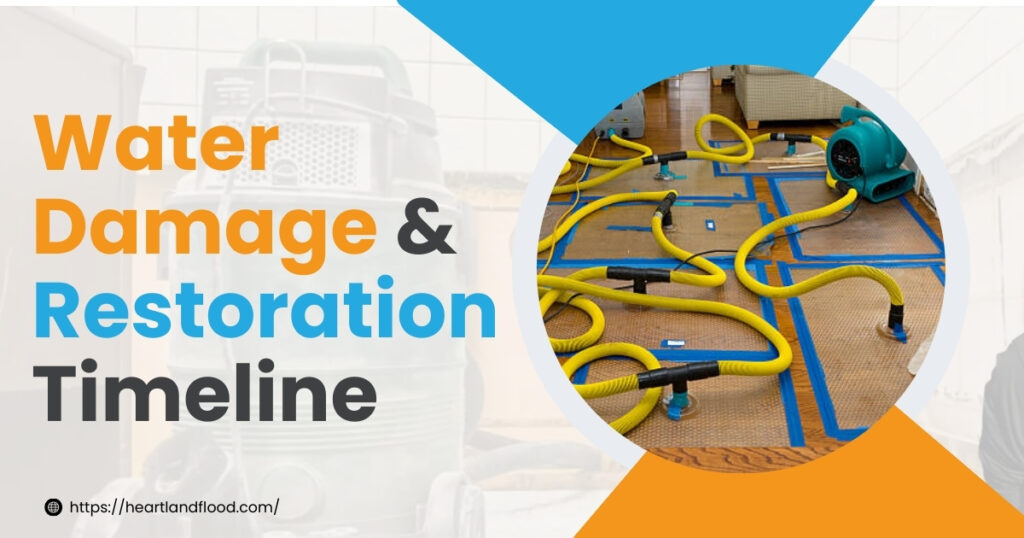
- First 24 hours: This is when water is removed, water damage is managed, and additional damage is prevented.
- 2–3 days: This is the time when the equipment runs continuously to extract moisture from your home’s walls, floors, and the air.
- 1–2 weeks: This is when damaged materials are fixed or substituted so that your home feels clean and habitable again.
Insurance Coverage in Kansas & Missouri

- What insurance covers: Most homeowners’ insurance covers sudden water damage like burst pipes or appliance failures, while flooding usually requires separate flood insurance.
- What it doesn’t cover: Sluggish leakages, poor upkeep, and groundwater flooding are typically excluded unless you have distinct authorizations or separate flood insurance.
- How to file claims quickly: You need to record damages quickly, talk to your insurer without delay, retain all invoices, and collaborate with restoration teams who help support insurance reporting.
Why Local Professional Restoration Matters

When your home water water-damaged, opting for a local restoration team makes sense. Local experts have the knowledge of Kansas and Missouri weather patterns, soil conditions, basement structure styles, and the types of water damage common in the region. That implies quick analysis, fewer slipups, and the correct resolution the very first time.
The professionals know the way regional insurance providers manage claims and what paperwork is expected, which helps you avoid delays and disagreements. It is best to look for local companies that are IICRC-certified, insured, licensed, and work directly with your insurer to streamline the process.
Local companies depend on community trust. Their reputation is based on customer reviews, referrals, and long-term relationships, and not just one-time jobs. Accountability gives you superior service quality, transparent communication, and confidence. This gives you peace of mind that your home’s water restoration is in safe and experienced hands.
Water damage will not wait, so neither should you. Looking for emergency water restoration in Kansas or Missouri? Call now for a 24/7 inspection or get your free estimate today!
Frequently Asked Questions (FAQs)
1. How much does water restoration cost in Kansas and Missouri?
Most projects cost $1,200 to $7,500, depending on the seriousness of the damage and how fast restoration begins.
2. Does homeowners’ insurance cover basement water damage?
Insurance typically covers unexpected damage; however, flood-related water generally calls for a distinct flood insurance policy.
3. How fast should water damage be addressed?
Water damage needs to be managed within a day or at the earliest to control mold development and avert long-term structural damage.
4. What is basement water remediation?
It is the process of getting rid of water, using drying materials, cleaning affected areas, and fixing damage safely.
5. Can I handle basement water damage myself?
Minor leakages are manageable, but flooding or dirty, polluted water calls for professional equipment use and expertise.
6. How long does basement water restoration take?
Most water restoration projects take three to seven days, depending on water levels, moisture spread, house materials affected, and damage severity.
7. What causes basement flooding in Kansas and Missouri?
Heavy downpour, foundation damage or cracks, sump pump failure, and sewer backups are common regional causes.
8. Is mold a risk after water damage?
Yes, mold can start growing within a day or two if moisture is not removed with the help of a professional water restoration team.

