
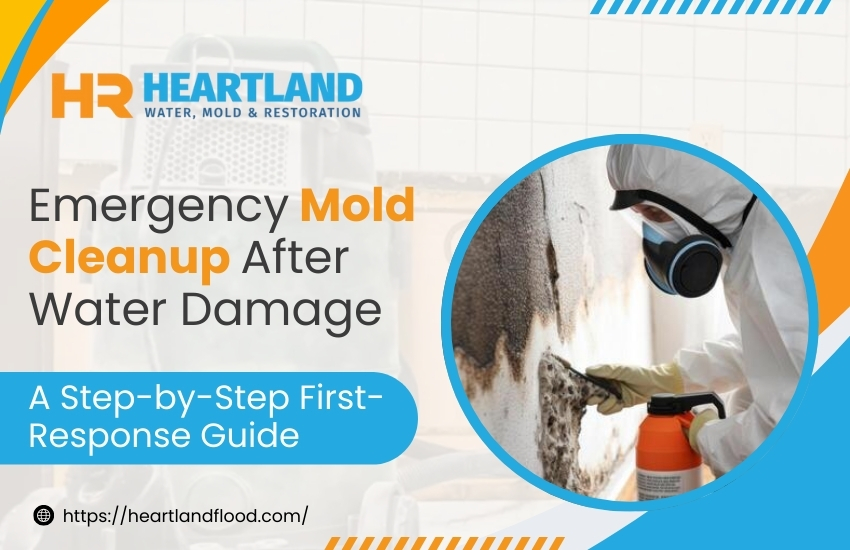
Act fast to prevent mold growth, reduce health risks, and protect your property from long-term structural damage after a water incident.
Water damage can turn into a mold problem faster than most homeowners expect. If you’ve just had a flood, leak, or burst pipe, you may be wondering what to do first to prevent mold from spreading. This guide on emergency mold cleanup after water damage walks you through the exact first steps to take, from drying affected areas to knowing when to call a professional, so you can protect your home, your health, and avoid costly repairs.
What Is Mold Damage Cleanup?
Mold damage cleanup means safely removing mold, fixing the moisture causing it, cleaning contaminated areas, and restoring healthy air, not just wiping visible spots but preventing mold from returning and spreading further.
In Kansas and Missouri, mold most often develops due to the following reasons:
- Flooding and storm damage: Standing water creates the perfect breeding ground for mold.
- Basement moisture: Poor drainage and seepage keep lower levels damp.
- Roof or plumbing leaks: Hidden drips allow mold to grow unnoticed.
- High indoor humidity: excess moisture in the air feeds mold growth.
Professional cleanup uses controlled methods to stop mold spores from becoming airborne and spreading during removal.
Commercial Mold Remover: Why Businesses Need Professional Help
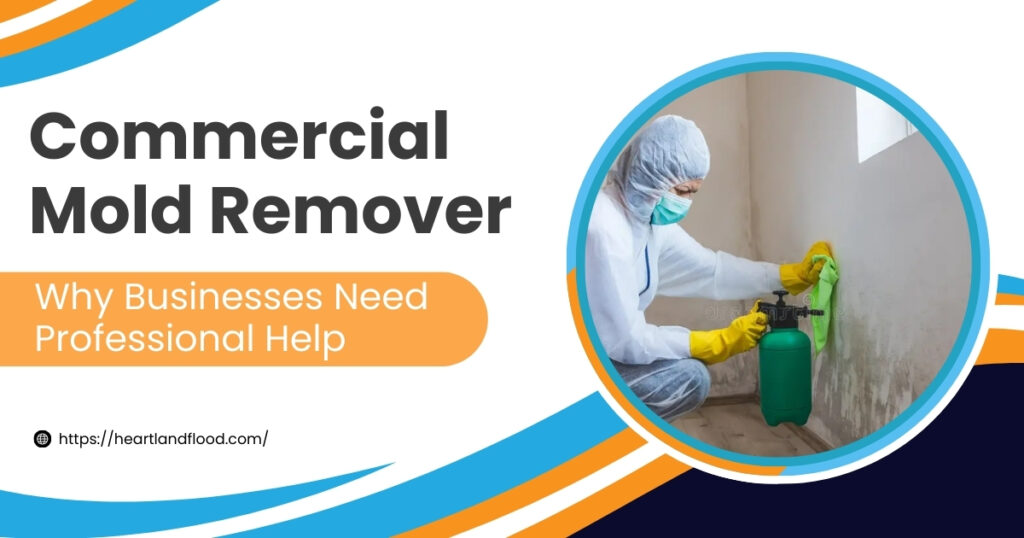
A professional commercial mold remover uses:
- Industrial-grade HEPA filtration: It’s used to capture microscopic mold spores from the air.
- Negative air containment: It is beneficial to prevent contamination from spreading beyond the affected area.
- EPA-approved antimicrobial treatments: Businesses opt for such treatments to kill active mold and inhibit regrowth.
- Moisture detection tools: Expert mold removers use specialized tools to locate hidden damp areas that fuel mold growth.
How Much Does Mold Remediation Cost in Missouri & Kansas?
Costs vary based on multiple factors:
| Factor | Impact on Your Cost |
| Size of affected area | Larger areas increase cleanup cost. |
| Severity of mold | Deep structural mold raises remediation costs. |
| Location (walls, HVAC, ceilings) | Hard-to-access areas cost more to treat. |
| Type of property | Commercial projects typically cost more. |
Average Mold Remediation Cost
- Small area: $1,500
- Medium area: $1,500 – $4,000
- Large/Commercial mold remediation: $4,000 – $10,000+
While prices in Kansas and Missouri tend to be below national averages, urgent remediation services may result in higher costs.
Best Mold Remediation Process Used by Professionals
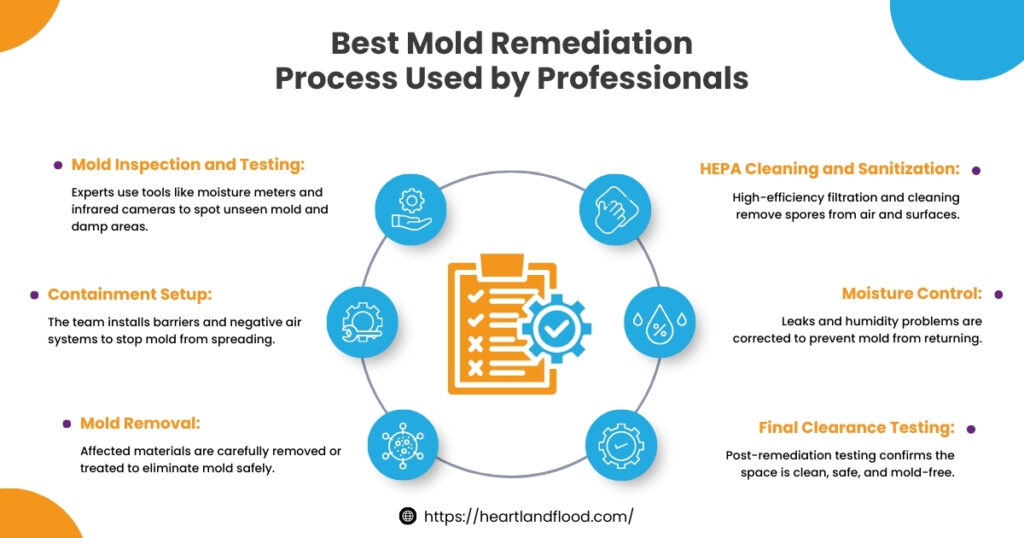
When selecting the best mold remediation solution, professionals follow a proven, step-by-step process:
- Mold Inspection and Testing: Experts use tools like moisture meters and infrared cameras to spot unseen mold and damp areas.
- Containment Setup: The team installs barriers and negative air systems to stop mold from spreading.
- Mold Removal: Affected materials are carefully removed or treated to eliminate mold safely.
- HEPA Cleaning and Sanitization: High-efficiency filtration and cleaning remove spores from air and surfaces.
- Moisture Control: Leaks and humidity problems are corrected to prevent mold from returning.
- Final Clearance Testing: Post-remediation testing confirms the space is clean, safe, and mold-free.
Why Professional Mold Remediation Is Better Than DIY
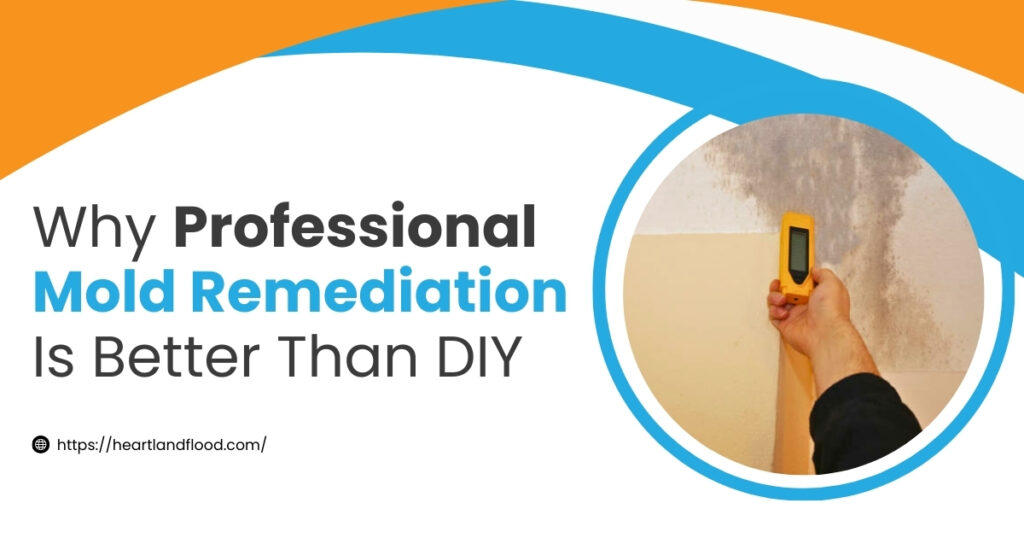
DIY mold removal may seem easy on your budget, but it often:
- Misses hidden mold
- Spreads spores
- Fails to fix moisture problems
Professional services deliver long-term protection rather than just surface-level cleaning.
Mold Remediation for Homes & Commercial Properties

From a home basement to a large commercial warehouse, professional mold remediation helps safeguard:
- Structural integrity: Mold remediation prevents moisture-related decay that can weaken building materials over time.
- Indoor air quality: It removes airborne spores and contaminants to keep the air clean and breathable.
- Health of occupants: It reduces exposure to mold that can trigger allergies, asthma, and respiratory issues.
Businesses can also lower liability risk and prevent costly operational shutdowns.
Serving Kansas & Missouri—Local Mold Experts
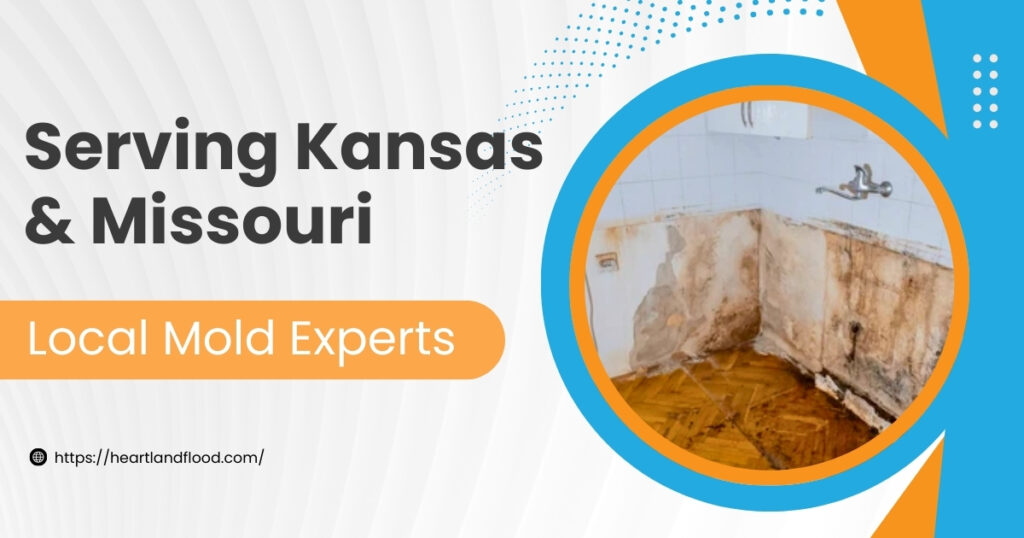
Local mold remediation experts have in-depth knowledge of:
- Midwest climate conditions: Experts account for regional weather patterns that can increase moisture and mold risk.
- Regional building materials: They know how local construction materials react to water and mold, ensuring effective treatment.
- Local insurance claim processes: Professionals are familiar with regional insurance procedures, helping streamline claims after mold damage.
This allows for quicker action and more effective results.
Mold can spread fast after water damage, but acting quickly makes all the difference. Professional cleanup protects your home, health, and investment while preventing future problems. Don’t wait—contact local mold remediation experts in Kansas or Missouri today to get fast, effective, and lasting results.
24/7 emergency mold damage cleanup is available.
Frequently Asked Questions (FAQs)
1. What is the best mold remediation method?
The most effective approach uses professional containment, HEPA filtration, safe removal, and moisture control to prevent mold from returning.
2. How long does mold remediation take?
Residential cleanup usually takes 1–3 days, while larger commercial projects can last several days depending on mold severity and area size.
3. Is mold dangerous to health?
Yes, exposure can trigger respiratory problems, allergies, and headaches and worsen asthma, making timely removal essential for occupant safety.
4. Can mold come back after remediation?
Mold may return if moisture isn’t resolved; professional services remove mold and address underlying water issues to prevent recurrence.
5. Does insurance cover mold damage cleanup?
Coverage depends on your policy; some insurers cover mold caused by flooding, leaks, or other sudden, covered water damage events.
6. Should I leave the property during mold remediation?
Occupants can usually remain elsewhere in the home, though large-scale projects may require temporary relocation for safety and efficiency.
7. How do I know if I need a commercial mold remover?
Large infestations, HVAC contamination, or mold affecting business operations signal the need for professional commercial remediation services.
8. What areas are most prone to mold in Kansas & Missouri homes?
Basements, crawl spaces, bathrooms, attics, and storm-damaged areas are especially vulnerable to mold growth in this region.

