
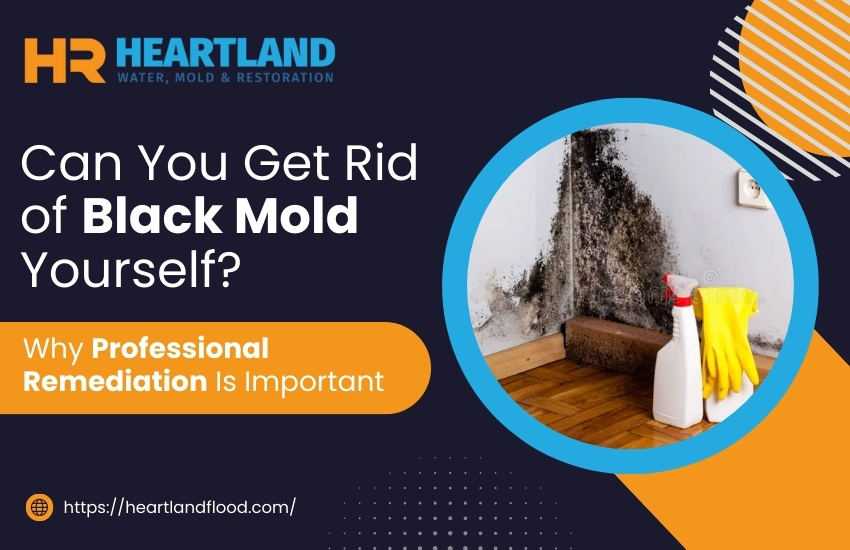
This guide reviews safety, cost, and effectiveness to explain why professional mold remediation results in better outcomes.
Black mold isn’t just unsightly; it’s a serious indoor hazard that can affect your health, your home’s structure, and property value. If you had faced water damage, flooding, or high humidity in your home, black mold can start growing very fast, often behind walls, under flooring, or in HVAC systems.
If you’re looking for black mold removal in Kansas or Missouri, this guide answers your most common questions: What causes black mold? Is it safe to remove it yourself? When should you call a professional? We’ll walk you through the warning signs, risks, and why hiring a certified black mold removal company is the safest solution.
What’s Black Mold and Why Is It Hazardous?
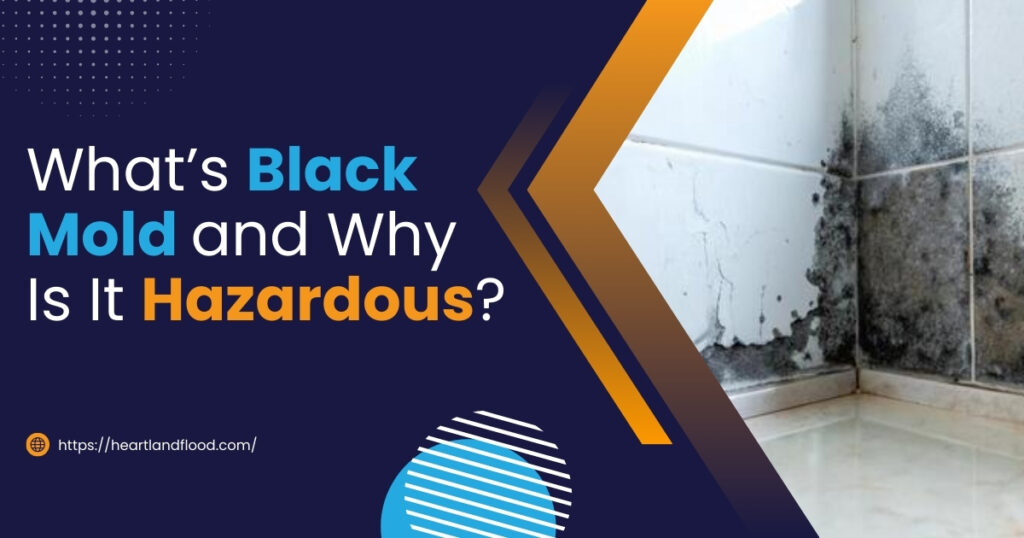
Black mold is a toxic fungus that grows in damp, water-damaged surroundings. It spreads through microscopic spores that travel through the air and settle on moist surfaces inside your home. Once airborne, these spores are easily inhaled and can affect indoor air quality quickly. That’s why professional black mold removal is critical; it doesn’t just clean visible growth, it removes contamination at the source and stops dangerous re-exposure.
Exposure to black mold may cause:
- Respiratory issues: Mold spores irritate your lungs and airways, triggering coughing, wheezing, breathlessness, and increased sensitivity in people with breathing conditions.
- Allergic reactions: Exposure can cause sneezing, scratchy eyes, skin eruptions, congestion, and throat irritation, especially in people with mold or environmental sensitivities.
- Headaches and fatigue: Mycotoxins released by black mold may affect the human nervous system, resulting in persistent headaches, brain fog, dizziness, and lingering fatigue.
- Worsened asthma symptoms: Black mold is an asthma trigger leading to increased attack frequency, severity, and recovery time, especially in kids and older adults.
Common Causes of Black Mold in Kansas and Missouri Homes
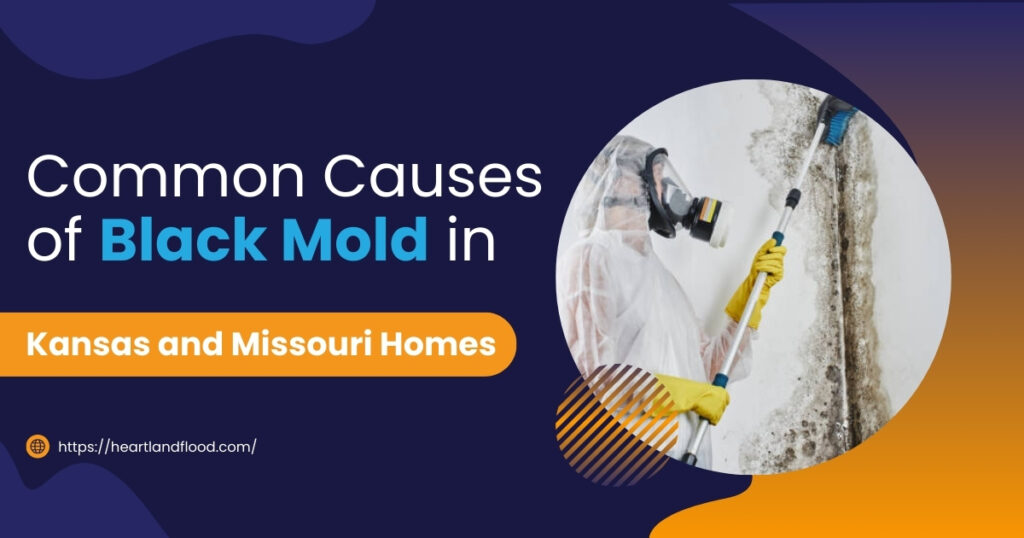
Mold doesn’t need flooding to grow; even small, hidden moisture problems can trigger it. If not addressed within 24 to 48 hours, mold can start forming and spread rapidly. Understanding the most common causes helps you spot risks early and know when to call a professional black mold removal company before the problem becomes out of your control, expensive.
Top causes include:
- Flood damage and stormwater intrusion: Heavy rain and flash flooding cause water to seep into foundations, crawlspaces, and walls, creating conditions for mold development.
- Leaking roofs or plumbing: Slow leakages from pipes, plumbing fixtures, or roofs frequently go unobserved, keeping your building materials damp.
- High indoor humidity: Excess humidity in the air from weather, cooking, or showers settles on surfaces and augments mold growth.
- Poor ventilation in bathrooms and basements: Still air traps moisture in walled spaces, preventing drying and allowing mold to develop.
- Water damage not dried properly: Imperfect drying after leakages or floods leaves moisture deep inside materials.
Signs You May Need Black Mold Remediation
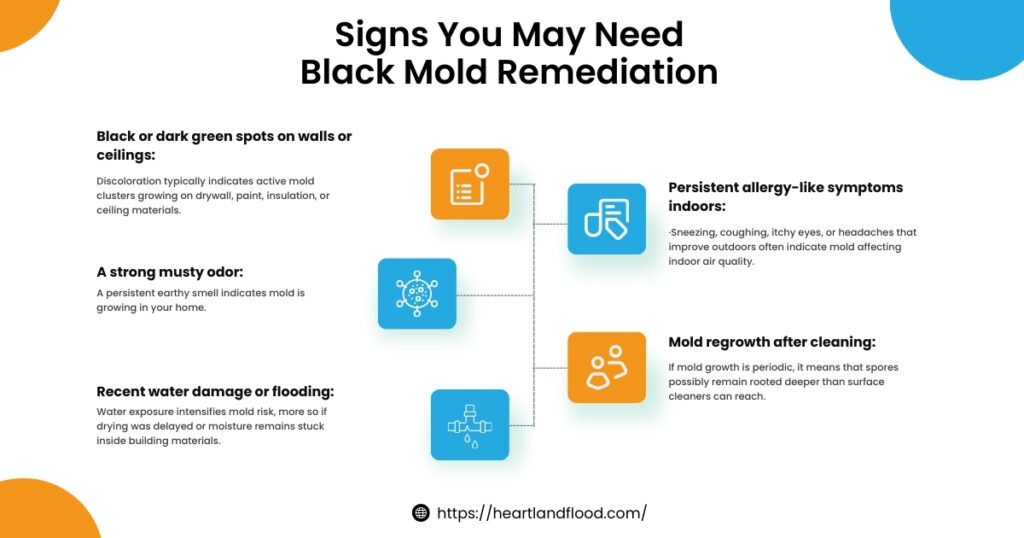
You should contact a professional black mold removal company if you detect any of the following warning signs in your home.
- Black or dark green spots on walls or ceilings: Discoloration typically indicates active mold clusters growing on drywall, paint, insulation, or ceiling materials.
- A strong musty odor: A persistent earthy smell indicates mold is growing in your home.
- Recent water damage or flooding: Water exposure intensifies mold risk, more so if drying was delayed or moisture remains stuck inside building materials.
- Persistent allergy-like symptoms indoors: Sneezing, coughing, itchy eyes, or headaches that improve outdoors often indicate mold affecting indoor air quality.
- Mold regrowth after cleaning: If mold growth is periodic, it means that spores possibly remain rooted deeper than surface cleaners can reach.
DIY cleaning may remove visible mold, but it rarely eradicates airborne spores, which is why professional black mold remediation is necessary for permanent results.
Professional Black Mold Remediation vs DIY Removal
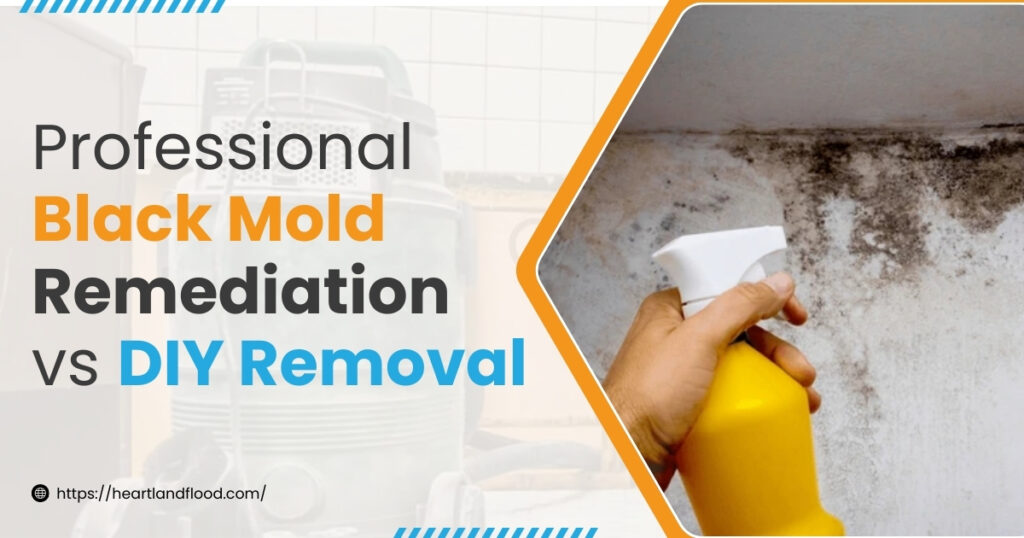
When it comes to black mold, DIY removal may seem convenient, but it has serious limitations. Professional black mold remediation ensures your home is safe, clean, and properly treated to prevent recurrence. Understanding the difference helps homeowners make safer, long-term decisions for indoor air quality and structural integrity.
DIY Mold Removal (Limited Use)
- Suitable only for small, surface-level mold: Minor patches on non-porous surfaces can sometimes be cleaned safely without specialized tools.
- Risk of spreading spores: Improper cleaning can release mold spores into the air, increasing exposure and contaminating other areas.
- No containment or air filtration: DIY methods don’t involve the use of HEPA filters or containment barriers.
Professional Black Mold Remediation (Recommended)
Hiring a professional black mold removal company ensures thorough, safe, and lasting results. Here’s how:
Key benefits include:
· Proper containment to prevent cross-contamination: Professionals use barriers and negative air pressure to stop spores from spreading to unaffected areas.
· HEPA air filtration: High-efficiency filters capture airborne mold spores, improving indoor air quality during and after remediation.
· Safe removal of contaminated materials: Mold-infested drywall, insulation, and flooring are carefully removed and disposed of to eliminate hazards.
· Moisture source identification and prevention: Experts locate leaks or humidity issues to prevent mold from returning.
· Clearance testing for peace of mind: Post-remediation testing ensures mold levels are safe and the job is complete.
When mold growth is widespread, hiring professionals is the safest and most reliable way.
Black Mold Removal Cost in Kansas & Missouri
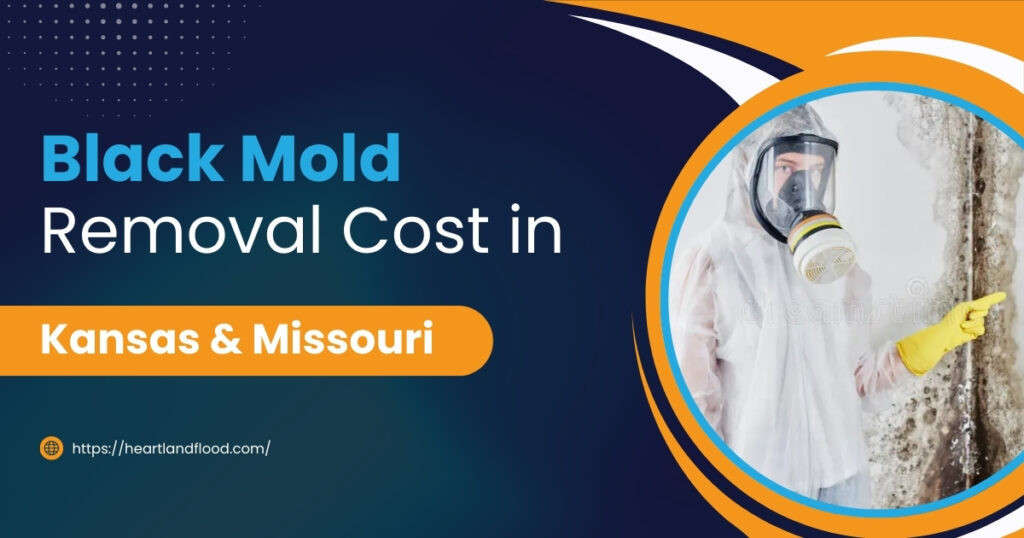
These estimates represent average restoration costs in Kansas and Missouri, based on local labor rates and current market demand.
Typical price range:
- Small areas: $500 – $1,500
- Medium remediation: $1,500 – $4,000
- Severe contamination: $4,000+
Why Choose a Professional Black Mold Removal Company?
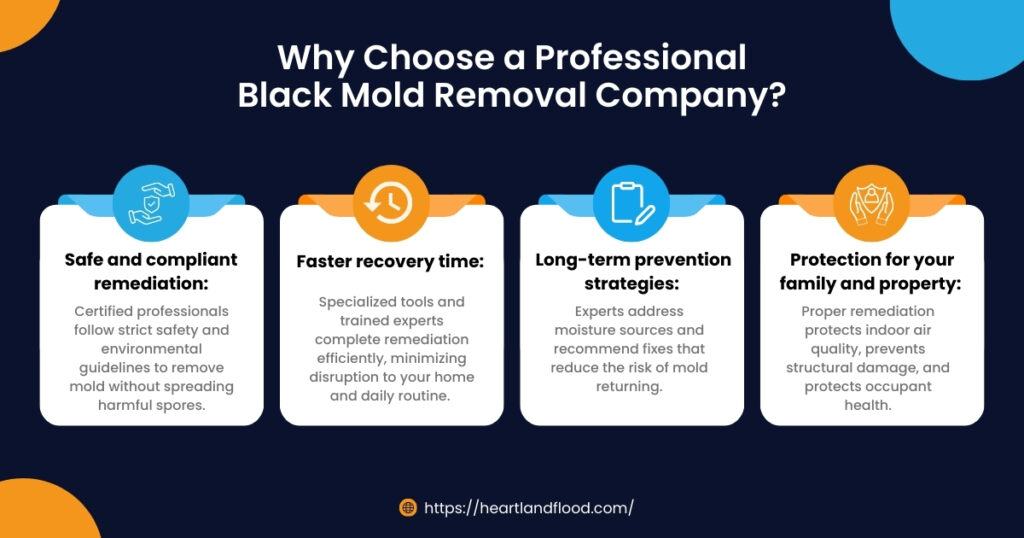
Choosing a licensed and experienced black mold removal company ensures your home is treated safely, thoroughly, and in compliance with industry standards.
- Safe and compliant remediation: Certified professionals follow strict safety and environmental guidelines to remove mold without spreading harmful spores.
- Faster recovery time: Specialized tools and trained experts complete remediation efficiently, minimizing disruption to your home and daily routine.
- Long-term prevention strategies: Experts address moisture sources and recommend fixes that reduce the risk of mold returning.
- Protection for your family and property: Proper remediation protects indoor air quality, prevents structural damage, and protects occupant health.
Local experts are familiar with the climate conditions and construction styles typical of homes in Kansas and Missouri.
Serving Kansas & Missouri – Local Black Mold Experts Near You
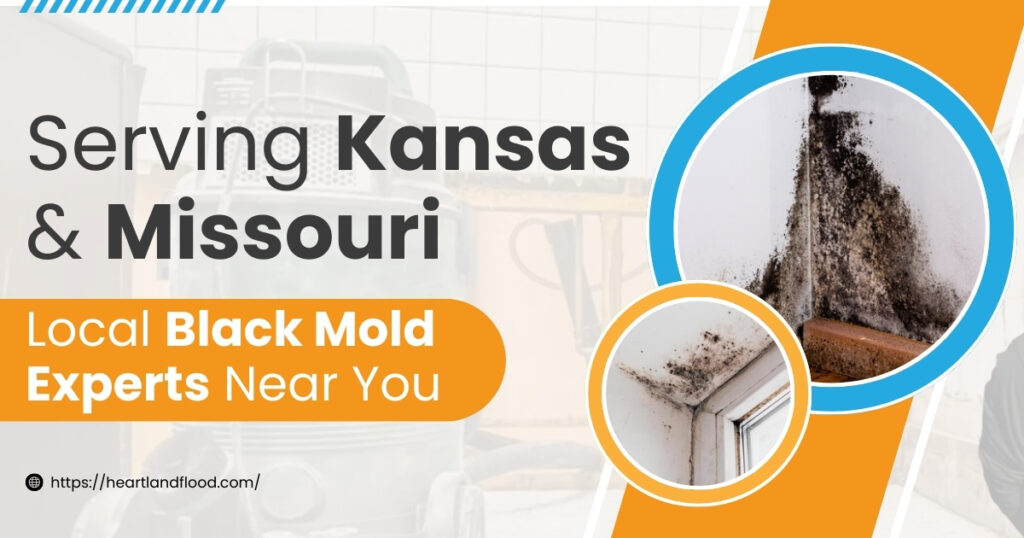
We deliver professional black mold remediation services throughout Kansas and Missouri, with rapid response and proven, dependable results. From private homes to commercial buildings, our specialists are fully equipped to remove mold safely, thoroughly, and efficiently.
- Emergency mold removal available
- Fully licensed, insured, and experienced team
Frequently Asked Questions (FAQs)
1. Is black mold dangerous to live with?
Yes, it is. Long-term exposure can trigger respiratory problems, allergies, headaches, tiredness, and aggravate asthma, especially for kids and seniors.
2. How fast does black mold grow?
Black mold can start growing within 24 to 48 hours after water exposure if moisture is not properly dried.
3. Can I remove black mold myself?
Small surface mold can be cleaned, but widespread black mold necessitates professional remediation to avert health risks and mold regrowth.
4. How do I find black mold removal near me?
Search for licensed black mold removal companies in Missouri or Kansas that offer certified remediation and emergency water damage response.
5. How long does black mold remediation take?
Most black mold remediation projects take one to five days, depending on the extent of contamination, materials affected, and property size.
6. Will black mold come back after remediation?
If moisture problems are fixed, professional remediation greatly reduces the probability of mold returning to your home.
7. Does homeowners’ insurance cover black mold removal?
Coverage depends on the cause. Mold caused by sudden, accidental water damage is often covered. You should confirm the details directly with your insurance provider.
8. When should I call a black mold removal company?
You need to call immediately after noticing mold, musty odors, or water damage to control the spread, property damage, and health hazards.

